Back in 1984, Michael Jackson and the Jackson brothers collaborated with Pepsi on the genre defining " Convention" TV commercial. Michael Jackson was filming the "Convention " TV commercial for Pepsi and got severely injured when his hair caught fire from a special effects explosion. Studio audience members said he was so calm, they thought the incident was part of the act.
BMW's groundbreaking "The Hire" was a series of eight short films (averaging about ten minutes each) was produced by Fallon Worldwide for the Internet in 2001 and 2002. All eight short films featured Hollywood A-List directors and actors.
The plots of each of the films differ, but one constant remains: Clive Owen plays "The Driver", a man who goes from place to place (in presumably rented BMW automobiles), getting hired by various people to be a sort of transport for their vital need.
"The Hire" is not about the car. It's about what's happening inside the car, and more than that, what's happening inside the characters. You don't have to know the car to understand the story.
Like a fine Bordeaux, “The Hire” held up over the years and, arguably, remains the standard for branded content.
Series 1:
Ambush
While escorting an elderly man to an undisclosed location, The Driver is confronted by a van full of armed men and is warned that the old man has stolen a large amount of diamonds. The old man claims to have swallowed the diamonds and that the men will likely cut him open to retrieve them. The Driver decides at the last minute to help him, participating in a car chase and shootout with the van. The Driver eventually evades his pursuers and watches their destruction. He then delivers the old man to a town nearby and asks the merchant if he did indeed swallow the diamonds. The client merely chuckles and walks away. The Driver then leaves.
Chosen
The Driver protects a holy Asian child that was brought to America by boat. The child gives the Driver a gift but says that he is not supposed to open it yet. After being pursued by many armed assassins, and being grazed in the ear, he delivers the boy to another holy man. The Boy however signals silently to the Driver that the man is not actually a monk, indicated by his footwear. The Driver defeats the impostor holy man and rescues the boy. As he leaves the Driver opens the gift which is revealed to be a Hulk bandage for his bleeding ear.
The Follow
The Driver is hired by a nervous movie manager to spy on a paranoid actor's wife. During his tailing of the wife, the Driver describes the right way to tail someone. As he follows her he begins to fear what he might learn of her apparently tragic life. He discovers the wife is fleeing the country and returning to her mother's, and that she's been given a black eye, likely by her husband. He returns the money for the job, refusing to tell where the wife is, and drives off telling the manager never to call him again.
Star
The Driver is chosen by a spoiled and shallow celebrity to drive her to a venue. Unbeknownst to her, her manager has actually hired the Driver to teach the celebrity a lesson. Pretending to escape her pursuing bodyguards, the Driver recklessly drives through the city, tossing the hapless celebrity all around the backseat. They arrive at the venue, where she is thrown out of the car and photographed by paparazzi in an embarrassing end on the red carpet.
Powder Keg
The Driver is chosen by the UN to rescue a wounded war photographer named Harvey Jacobs from a hostile territory. While they are leaving Jacobs tells the Driver about the horrors he saw as a photographer, but he regrets his inability to help war victims. Jacobs answers the Driver's curiosity about why he is a photographer by saying how his mother taught him to see. He gives the Driver the camera film needed for a New York Times story and also his dog tags to give to his mother. When they reach the border, they are confronted by a guard who begins to draw arms as Jacobs begins taking pictures, seemingly trying to get himself killed. The Driver drives through a hail of gunfire to the border, but finds Jacobs killed by a bullet through the seat. The Driver arrives in America to visit Jacobs' mother and share the news of him winning the Pulitzer Prize and hand over the dog tags, only to discover that she is blind.
The Driver is hired by the FBI to help defuse a hostage situation. A disgruntled employee has kidnapped a CEO and has hidden her, demanding $5,088,042. The Driver delivers the money, writing the sum on his hand as instructed by the hostage taker. After he is told that he holds the life of a person in his hand, he is ordered to burn the money. As he complies, the federal agents break in and attempt to subdue the man, who shoots himself in the head without revealing where the woman is hidden. The Driver then tries to find the hostage before she drowns in the trunk of a sinking car. As a twist, the kidnapped woman is revealed to be the hostage taker's lover. She coldly taunts the dying man in the hospital.
Ticker
In an unnamed foreign country, the Driver drives a wounded man who carries a mysterious briefcase, while under helicopter attack. During the attack the briefcase is struck by a bullet, causing a display on it to begin counting down, and it to leak an unknown fluid from the bullet hole. The Driver manages to cause the helicopter to crash, but refuses to proceed without knowing the contents of the damaged briefcase. It is revealed that the man guards a human heart for transplant to a statesman (shown in military uniform), whose life and peacemaking is needed for the continued freedom of the country's people. The case is delivered by the Driver in time for the surgery. Also present are another military officer whom the passenger had said would take over the country with tyranny if his superior died (and whose uniform matches the soldiers who had tried to intercept the heart), and US agents who ensure that he does not interfere with the surgery, and so is forced to give up his attempt to take the country by force.
Beat The Devil
The Driver is employed by James Brown, who goes to meet the Devil to re-negotiate the deal he made as a young man in 1954 to trade his soul for fame and fortune. He is worried about his ageing and the fact he can no longer do his moves like the splits, and says his lessened ability to perform means he cannot maintain his fame and fortune. He proposes a new wager, for the stakes of the Driver's soul against another 50 years for his career, betting on the Driver drag racing against the Devil's doorman/driver Bob on the Las Vegas Strip at dawn. The race ends with the Driver swerving to pass around a train while the Devil's car crashes and explodes. Having won the race, the Driver leaves James Brown in the desert, but as he drives away he sees him as a young man again, who then does a handspring into the splits. The final scene shows Marilyn Manson who lives down the hall from the Devil, complaining that the noise is disturbing his bible reading, much to the Devil's fear.
The films proved to be so popular that BMW ended up producing a free DVD for customers who visited certain BMW dealers.
‘The Hire’’ raked in several awards. The first-ever Cannes Titanium Lion, two Grand Clio Awards , Cannes Grand Prix Cyber Liol Cannes, France, along with Best of Show at the One Show Interactive competition. It earned kudos within the entertainment arena as well. “Best Excuse for Broadband” at WIRED Magazine’s annual Rave Awards in 2001 . ‘
"Hostage’’ from the second series of films earned the award for Best Action Short during the Los Angeles International Short Film Festival in 2002. Entertainment magazines reviewed the films. Even the New York Times gave the films a favorable review. In 2003, it was inducted into the permanent collection of the Museum of Modern Art (MOMA).
The five initial films cost an estimated $15 million, and the last three cost about $10 million.
“We Care About New York” is a menacing 1991 anti-littering public service announcement by David Lynch, in which littering is linked to the specter of rat infestation.
Tarsem Singh’s homage to “The Swimmer" directed by Frank Perry. In the 1968 movie, Burt Lancaster literally swims from swimming pool to swimming pool to his home.
He names the route Lucinda's River after his wife. Director Tarsem with Larry Barker and Rooney Carruthers add a twist to make it a memorable 1993 TV commercial for Levi’s.
A classic TV spot for London Metropolitan Police recruitment, circa 1990. Dealing with issues such as domestic abuse, race, drink related violence and internal police disagreement which are just as relevant today. And all with a raw energy, delivering realism and objectivity by using the inspirational Rudyard Kipling’s poem 'If', intelligently juxtaposed with scenarios faced on a daily basis by police officers.
It is brilliant, and would undoubtedly make anyone want to don the bobby helmet. Or in my case, the khakhi. .
Curiously, Rudyard Kipling and Indra Sinha were born in Mumbai, India . Or to be precisely, within a one mile radius of Mumbai Police headquarters.
Client: London Metropolitan Police
Ad Agency: Collett, Dickenson & Pearce (now CDP/Travis Sully, London )
This tv commercial (or is it a music video?) was created by the hughley admired Leagas Delaney in 1997. It was filmed at the rate of three or four stars a day, and took more than a year from inception to finish.
’Perfect Day’, BBC’s stunning corporate communication (yes you got that right, corporate communication) showing the range of music on offer to viewers and listeners, could never have been made without that kind of dedication.
The brief was to show the diverse range of music offered by the BBC across every TV and radio channel. The creative team plumped for "Perfect Day', recorded by Lou Reed in 1973, because it had acquired a new popularity when featured on the soundtrack of Trainspotting
Major recording stars earned just 250 pounds for their efforts. The country and western star, Tammy Wynette, drove 500 miles from Nashville with her tour entourage just to take part.
The four-minute film starts with Lou Reedsinging the first line of his ballad, Perfect Day, then handing over to musical giants ranging from David Bowie and Bono, to opera singer, Lesley Garrett and the BBC Young Musician of the Year, Sheona White. The formal garden in the film symbolizes people’s dreams and memories.
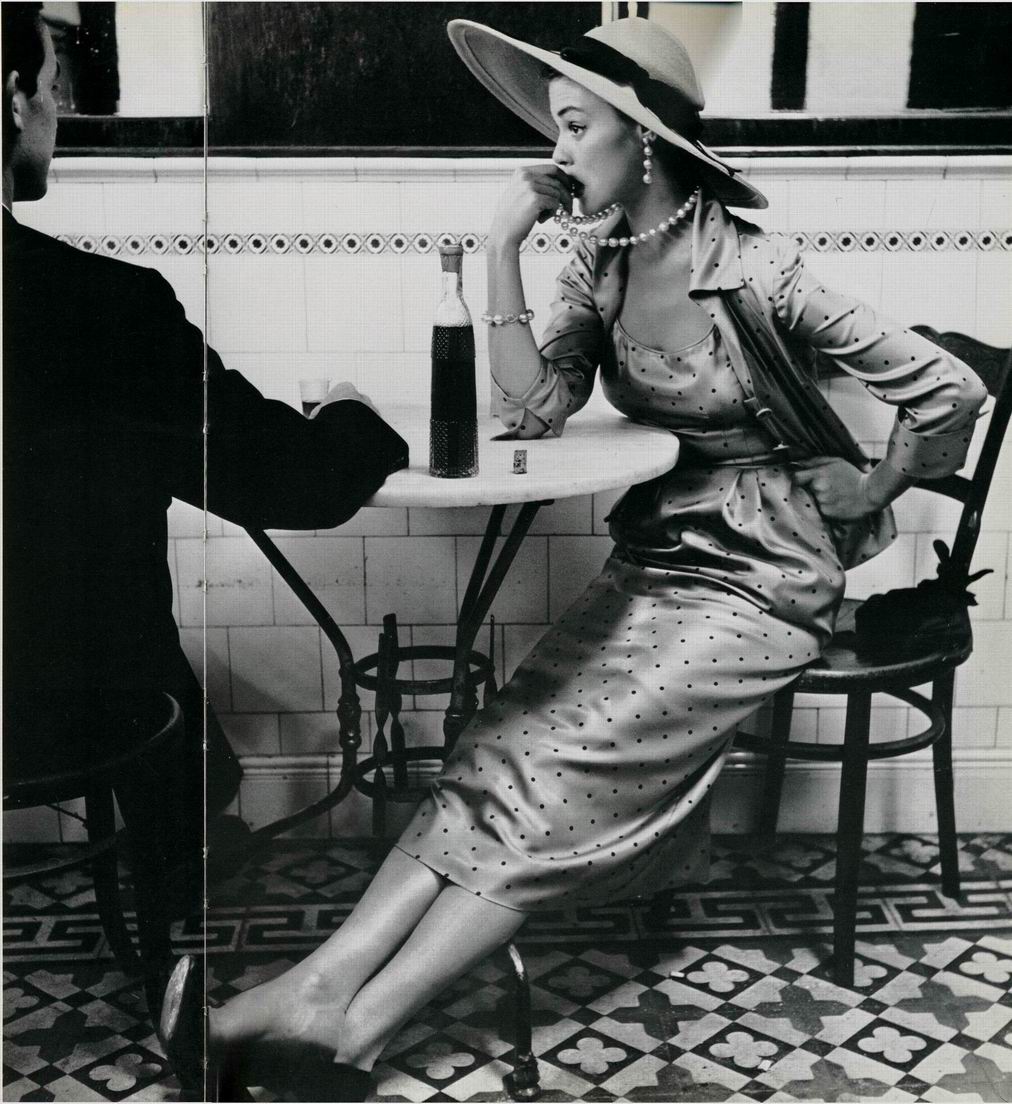
The brilliant fashion photographer Irving Penn said, "Photographing a cake can be art." Much is made of the phrase 'a true genius' and is too often over used. In terms of the development of fashion photography, "true genius' rightly applies to Irving Penn. He changed the way we saw the world, and our perception of what is beautiful. He went on from black and white to color. Women to still life.
Irving Penn can single-handedly be credited with elevating fashion photography to an art form . His pictures often appeared in the pages of Vogue. And shooting up to his last days. Penn frequently stressed the ephemeral nature of life by bringing out interesting flaws and impurities in his subjects, such as wrinkles, hairs, or dirt, which would have gone unnoticed on cluttered, distraction , or ornate backgrounds.He said, "Sensitive people faced with the prospect of a camera portrait put on a face they think is one they would like to show the world. Very often what lies behind the facade is rare and more wonderful than the subject knows or dares to believe." Irving Penn, 1917-2009. RIP.
Irving Penn at a photo shoot with a New Guinea mud man and his child in 1972.
All sources acknowledged. Do let me know if you need any changes.
A year after I posted about Letterheady, the fantastic website run by Shaun Usher showcasing interesting letterhead designs, mainly legendary artist, politicians, scientists and corporations, I find Letterheady is still going strong. Its collection is delightfully getting bigger. This time I have picked out a few actors, musicians and directors. I just see in my mind's eye the days before email, Facebook and Twitter. Charlie Chaplin taking the to send me a hand-written letter. What better example of humility? Here are some of my favorites. And for those who don’t know the names I have listed below , I can just quote the great Groucho Marx: “A child of five would understand this. Send someone to fetch a child of five.”
Groucho Marx, 1961
Charlie Chaplin, 1967
Michael Jackson, date unknown
Steven Spielberg, 1982
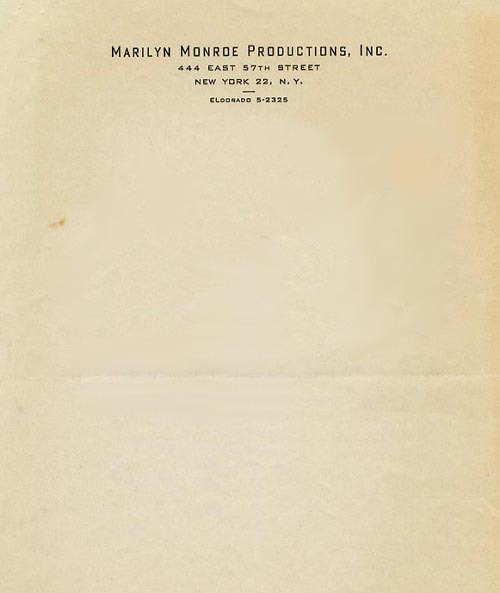
Marilyn Monroe Productions, 1962
Arnold Schwarzenegger, 1989
Louis "Satchmo" Armstrong, date unknown.
Steve McQueen, 1969
Johnny Cash’s personal letterhead, date unknown
Letterhead used by Freddie Mercury in 1973, the year Queen’s debut album was released. Queen, 1973
James Dean, 1955
Marlene Dietrich, date unknown
The characters to the left of the taijitu translate as ’Using no way as way’, whilst those on the right read ‘Having no limitation as limitation’.
Bruce Lee , 1968
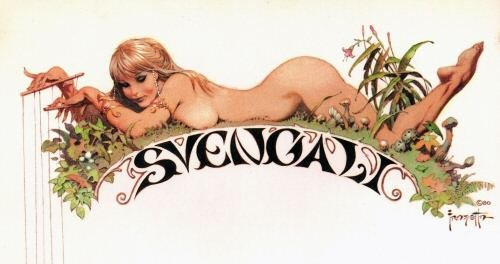
In the early-1970s, legendary artist Frank Frazetta was asked by Bo Derek and her husband, John, to design the letterhead for their new production company: Svengali Productions. This stunning rough sketch, in which a nude Bo Derek acts as svengali to an unidentified male puppet below, was one of Frazetta’s preliminary ideas.
Svengali Productions., c 1970
Elvis Presley, 1965
Harpo Marx, 1930
Aged just 8 in 1936, Shirley Temple already had her own letterhead. And an Oscar. Shirley Temple, 1936
The song's discussion of the troubled economy and race relations resonated with the American public and it remains Hornsby's best known song. Beautiful.Not only pleasant to listen but thought provoking. The chorus presents several lines insisting that social ills are "just the way it is", and repeatedly suggests resigning oneself to them as a fact of life. However, the chorus ends with theBruce Hornsby rebukes this attitude by insisting "ah, but don't you believe them."
The Way It Is ~ Bruce HornsbyAnd The Range. 1986
Standing in line marking time-- Waiting for the welfare dime 'Cause they can't buy a job The man in the silk suit hurries by As he catches the poor old ladies' eyes Just for fun he says "Get a job"
That's just the way it is Some things will never change That's just the way it is But don't you believe them
They say hey little boy you can't go Where the others go 'Cause you don't look like they do Said hey old man how can you stand To think that way Did you really think about it Before you made the rules He said, Son
That's just the way it is Some things will never change That's just the way it is But don't you believe them
Well they passed a law in '64 To give those who ain't got a little more But it only goes so far Because the law another's mind When all it sees at the hiring time Is the line on the color bar
That's just the way it is Some things will never change That's just the way it is But don't you believe them
"Is There A Santa Claus?" was the headline that appeared over an editorial in the September 21, 1897 edition of the New York Sun. The editorial, which included the response of "Yes, Virginia, There is a Santa Claus," has become an indelible part of popular Christmas lore in the United States
Everybody's a star in this Aardman Animations Oscar-winner in which animals discuss life at the zoo. Accustomed to open spaces and sunnier climes, they comment on the accommodation, diet and the English weather. “Creature Comforts” tv commercials for Heat Electric. Moreover, throughout the Heat Electric tv spots, the creative team succeeded in crafting a consistently warm and cozy tone, which appropriately captured the warmth and homeliness of central heating. Circa 1990.
In an age of Andy Warhol’s “ everybody will be famous for 15 minutes”, conclusive answer to a general question - a sound bite - and the attempts to present a cheery spin by talking heads on a complex issue while the human bury their personal issues and problems with the issue. The series gently mocks the “staged” performance sometimes given by members of the general public when being interviewed for television vox-pops. In an ironic twist these tv commercials are better remembered than the original film that spawned them
Leonard Chershire Disability: Creature Discomforts
A series of four tv spots highlighting disability and featuring the voices of disabled people telling of their experiences premiered on ITV on Christmas Day 2007. In a review of Creature Discomforts, the author opens: "Can I ask you a question?" a young movie usher once asked a close friend of mine, who is permanently in a wheelchair due to cerebral palsy. "Do people like you ever get sexual urges?" "Why?" responded my friend, who has never suffered fools gladly. "Do you lose yours when you sit down?"
That's the kind of idiocy disabled people are forced to put up with on a daily basis, from ignorant questions and attitudes from society at large.
The PSAs challenges people to change the way they see disability and the characters are based on the unscripted voices of disabled people talking about the issues that affect their lives. A noteworthy feature in the first game of the series, ‘Flyzz’ featuring Callum The Chameleon, was that it carried an ‘audio only’ option, making it one of the few flash games that are accessible to the visually challenged. Do visit the Creature Discomforts website to discover more information on the characters, to see the ads in their other formats and for lots of other treats and extras.
This was conceived and directed by the genius, Nick Park and produced by Aardman Animations featuring the voices of British non-actors in the same vein as the "man on the street" vox pop interviews. It was produced as part of a series called Lip Synch for Channel 4. The film won Nick Park the Academy Award for Best Animated Short Film in 1990.
The film shows various animals in a zoo being interviewed about their living conditions. These include turtles, a female gorilla, a family of polar bears, and a melancholic Mountain Lion who complains about the "lack of space" and the "grass with pollen that gives me hay fever every day!"
The brilliant dialogue was created by interviewing residents of a housing development, an old people's home and a family that lived in a local shop (the polar bears). Clay animation was then created that attributed the answers to zoo animals. One of the most popular characters was the Mountain Lion. He was in fact a Brazilian student who lived in a hotel and was talking about his own situation.
The characters' dialogue was obtained by taking tape recordings of everyday people talking about the comfort and benefits of the electrical appliances in their homes then using extracts of the soundtracks - complete with pauses, false starts, repetitions, hesitations and unscripted use of language (such as "easily turn-off-and-on-able"). The selected interviewees spoke in a range of down-to-earth regional accents.
 Back in 1984, Michael Jackson and the Jackson brothers collaborated with Pepsi on the genre defining " Convention" TV commercial. Michael Jackson was filming the "Convention " TV commercial for Pepsi and got severely injured when his hair caught fire from a special effects explosion. Studio audience members said he was so calm, they thought the incident was part of the act.